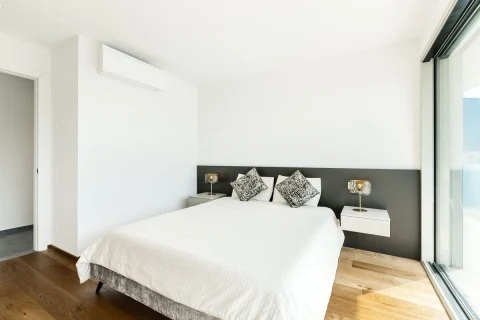
Sacramento summers are no joke. When temperatures routinely break 105°F and push toward 110°F during heat waves, keeping your home comfortable isn't just a comfort issue. It's a health and safety imperative. Sacramento summer heat cooling demands a system and strategy that can handle extreme conditions reliably, efficiently, and without breaking the bank on SMUD or PG&E electricity bills that can surge dramatically during peak summer months. This guide covers the best approaches for cooling Sacramento homes in the modern era, with mini splits at the center of the most effective strategies.
Sacramento sits in ASHRAE Climate Zone 12, one of the hottest residential climate zones in the Western United States. The Sacramento Valley's geography creates a heat trap: the Coast Range to the west blocks marine air that cools coastal California, while the Sierra Nevada to the east creates a rain shadow. Summer days regularly reach 95–110°F from June through September, with overnight lows rarely dropping below 65–70°F during the hottest stretches. Your cooling system needs to be ready for all of it.
Why Sacramento Heat Is Different (and Harder to Handle)
Not all hot climates are equal from an HVAC perspective. Sacramento's hot-dry climate creates specific challenges that affect both equipment selection and operation strategy:
Extreme Temperature Peaks
Sacramento regularly records temperatures of 105–110°F during summer heat events. Mini splits and air conditioners are rated at a standard outdoor temperature of 95°F. At 110°F, most systems are operating outside their optimal design envelope, producing less cooling capacity than rated. This is why proper sizing is even more critical in Sacramento than in moderate climates: a system that barely keeps up at 95°F will fall significantly short on a 108°F day.
Low Humidity
Sacramento's summer humidity is typically 10–30%, much drier than coastal California or the humid South. This affects cooling strategy: evaporative (swamp) coolers work well in Sacramento's dry climate and can supplement or replace air conditioning for a portion of the season. However, on the hottest days (which often coincide with humidity spikes from monsoonal moisture), AC is essential. The low humidity also means your body can sweat-cool effectively outdoors, but indoor surfaces and materials get extremely hot, creating high radiant heat loads that your cooling system must overcome.
Older Housing Stock
A significant portion of Sacramento's residential housing was built in the 1950s–1980s, often with minimal insulation by modern standards. A typical Sacramento home from this era might have R-11 wall insulation and R-19 attic insulation, far below the R-20 walls and R-38 attic insulation recommended for Zone 12 by California Title 24 energy standards. Poor insulation dramatically increases cooling loads and makes right-sizing your HVAC system even more important.
Key fact: During Sacramento's July 2024 heat event when temperatures reached 108°F, SMUD reported a peak demand record of 3,847 megawatts, roughly 40% above average summer demand. Homes with efficient mini splits on SMUD's time-of-use rate plans that had pre-cooled during morning off-peak hours maintained comfort through the peak without running AC at full tilt during the most expensive rate hours.
Sizing Your Cooling System for Sacramento's Extreme Heat
Sacramento requires upsizing your cooling capacity beyond what standard BTU-per-square-foot rules suggest for moderate climates. Here's a practical sizing framework for Sacramento Zone 12:
Base BTU Calculation
- Standard Sacramento rooms (1990s–present construction, good insulation): 20–25 BTU per sq ft
- Older homes (pre-1980, limited insulation): 25–35 BTU per sq ft
- South and west-facing rooms with significant glass: Add 20–30% to calculated load
- Rooms with vaulted ceilings: Calculate based on actual air volume, not floor area
- Attached garages conducting heat: Add 500–1,500 BTU for garage-adjacent rooms
Practical Examples
- 800 sq ft primary living area, 1970s construction: 24,000–28,000 BTU
- 500 sq ft master bedroom, west-facing, newer construction: 12,000–15,000 BTU
- 1,200 sq ft open-plan kitchen/living, 2000s construction: 24,000–30,000 BTU
These are starting points: a proper Manual J calculation accounts for your specific home's insulation values, window area, orientation, and local design temperatures. For Sacramento, the design cooling temperature used in Manual J is typically 103–107°F depending on location within the greater Sacramento area.
Mini Splits for Sacramento: The Best Cooling Solution
Ductless mini splits have become the dominant choice for Sacramento cooling upgrades, additions, and new construction. Here's why they outperform alternatives in Sacramento's specific environment:
Inverter Technology Handles Extreme Conditions
Traditional single-stage air conditioners are either fully on or fully off. In Sacramento's extreme heat, this creates problems: a properly sized single-stage unit runs nearly continuously during peak heat, while an oversized unit short-cycles. Inverter mini splits continuously modulate compressor speed from 30% to 100%+ of rated capacity, maintaining setpoint temperature with far more precision and efficiency. High-capacity inverter models (like Mitsubishi's MXZ series or Daikin's multi-zone systems) can even deliver above-rated capacity for short periods to recover from setback periods quickly.
High SEER2 Efficiency for Sacramento's Long Cooling Season
Sacramento's cooling season runs from approximately May through October, six months of significant air conditioning use. At SMUD's rates (averaging $0.12–$0.18/kWh depending on tier and time-of-use), every point of SEER2 improvement translates to real annual savings. A system upgrade from 14 SEER to 22 SEER2 on a Sacramento home cooling 2,000 sq ft can save $400–$700 per year in electricity costs, a payback period of 5–8 years on the efficiency premium alone.
Zone Control for Sacramento Home Layout
Sacramento homes often have distinct thermal zones: main living areas that see afternoon west sun and get extremely hot, versus bedrooms on the east or north side that stay cooler. A multi-zone mini split system can run the living area at full cooling during the hot afternoon while running the bedroom zone on a lighter load, or shutting it off entirely when unoccupied. This zone-specific control is impossible with a single whole-house system and delivers meaningful efficiency gains in Sacramento's climate.
Sacramento Cooling Strategy: Beyond Just the HVAC Unit
A great mini split system works best as part of a whole-home cooling strategy. Sacramento homeowners who combine these measures with efficient HVAC achieve the best results:
Attic Insulation Upgrade
Attic insulation is the single highest-impact home improvement for Sacramento cooling. An attic that reaches 140–160°F on a Sacramento summer day will conduct enormous heat into living spaces below. Upgrading from R-19 to R-49 attic insulation typically costs $1,200–$2,500 for a typical Sacramento home and can reduce cooling loads by 15–25%. This is often the first investment to make before sizing a new HVAC system: it may allow you to downsize and save money on both equipment and operation.
Radiant Barrier
A radiant barrier installed under the roof deck reflects 90%+ of radiant heat before it reaches attic insulation. Sacramento's intense sun makes this highly effective: studies at UC Davis have documented 5–10°F attic temperature reductions with radiant barriers in Sacramento Valley homes, directly reducing cooling loads.
Window Treatments
South and west-facing windows in Sacramento homes can admit enormous solar heat gain. Exterior shading (overhangs, pergolas, solar screens) is most effective; interior cellular shades and blackout curtains provide a reasonable alternative. Blocking direct afternoon sun on west-facing rooms can reduce that zone's cooling load by 20–35%.
Pro tip: SMUD's Smart AC Program offers free smart thermostats to eligible Sacramento customers and allows SMUD to cycle your AC for brief periods during grid emergencies in exchange for bill credits. Pair this with a mini split's excellent recovery speed (inverter systems pull temperatures back down quickly after brief cycling) for maximum bill optimization during peak summer demand events.
Best Mini Split Models for Sacramento's Hot-Dry Climate
Not all mini splits perform equally in Sacramento's extreme conditions. Look for these specifications when selecting a system for Sacramento climate zone 12:
- High-ambient temperature operation: Rated to operate at 115°F+ outdoor ambient (many standard units are only rated to 115°F; verify for Sacramento's occasional extremes)
- SEER2 of 18+: Minimum for a sensible investment in Sacramento's long cooling season; 20+ SEER2 preferred
- Inverter compressor: Essential for efficiency and temperature stability in extreme heat
- Blue Fin coating: Not critical inland but worthwhile for longevity
- Quiet operation: Sacramento's warm nights mean windows stay closed and indoor sound matters more
Top models for Sacramento include the Mitsubishi MSZ-GL and MSZ-AP series, Daikin 19 Series and Aurora, and Fujitsu Halcyon Extra series, all offering SEER2 ratings of 20–26 and proven performance in California's hottest residential climates.
Summary: Cooling Sacramento Homes Successfully Through Extreme Summers
Conquering Sacramento summer heat requires a combination of properly sized mini split HVAC equipment, smart energy management to work with SMUD's rate structures, and complementary building improvements that reduce cooling loads. Size your system for Sacramento's extreme 105–110°F design temperatures rather than moderate climate assumptions, choose inverter mini splits with high SEER2 ratings for the region's long cooling season, and pair your new system with attic insulation upgrades and window treatments for the best comfort and lowest operating costs. Sacramento summers are intense, but with the right strategy, you can stay cool and keep your utility bills under control even when the Valley hits triple digits for weeks at a stretch.