Installing a mini split in Sacramento is one of the highest-return home improvement investments in Central California, a region that ranks among the nation's hottest large metro areas, with summer temperatures regularly reaching 105–112°F and a cooling season that can run six months from May through October. Understanding the installation process, permitting requirements, contractor selection, and realistic cost expectations for mini split installation in Sacramento helps homeowners make informed decisions and avoid the surprises that can derail otherwise straightforward projects.
This guide covers everything Sacramento homeowners need to know: the permit process, typical installation timelines, line set routing considerations for Sacramento's housing stock, electrical requirements, and what separates a quality installation from a mediocre one in Sacramento's demanding climate.
Why Sacramento's Climate Makes Installation Details Critical
Sacramento's climate profile (ASHRAE Climate Zone 12, design cooling temperature 100°F dry-bulb) means mini split systems here work harder than in almost any other major California metro. An installation detail that performs fine in the mild Bay Area can become a failure point in Sacramento. Key installation factors that matter more in Sacramento than in cooler climates:
- Outdoor unit placement: Units in direct afternoon sun (west or southwest-facing) in Sacramento operate in ambient temperatures that can exceed the rated operating range (typically 115°F maximum). Shaded or north/east-facing placements keep outdoor unit temperatures 15–25°F lower and extend system life significantly
- Line set insulation: Line sets carrying refrigerant through unconditioned attics in Sacramento can reach 140–160°F in summer. Proper line set insulation (closed-cell foam at minimum 3/4" thickness) prevents refrigerant superheating that degrades system efficiency
- Condensate drainage: Sacramento's summer humidity, while lower than the Gulf Coast, still generates significant condensate during cooling. Proper gravity drainage or condensate pump installation prevents backup into walls and ceilings
Permits and Inspections: Sacramento County and City Requirements
Mini split installations in Sacramento require permits in virtually all jurisdictions. This is not optional. Unpermitted HVAC installations can create problems at home sale, may void equipment warranties, and present liability issues if the system is involved in a fire or injury.
City of Sacramento
The City of Sacramento Building Division requires both a mechanical permit and an electrical permit for new mini split installations:
- Mechanical permit: Required for the mini split system itself; includes plan check if the installation is complex
- Electrical permit: Required for the new 240V dedicated circuit; includes panel work and wire run to outdoor unit
- Typical permit cost: $200–$500 for mechanical + $150–$350 for electrical; varies by system size and complexity
- Inspection: Rough-in inspection (before walls are closed) and final inspection required; most single-zone installations pass in one visit
Sacramento County (Unincorporated Areas)
Unincorporated Sacramento County uses the same permit requirements but through the Sacramento County Department of Community Development. Permit fees are similar to the city. Incorporated cities within the county (Folsom, Citrus Heights, Elk Grove, Rancho Cordova) each have their own building departments. Check with the specific city for their permit requirements.
Title 24 Compliance
California's Title 24 energy code applies to HVAC replacements and new installations above a certain scope. For mini split installations that replace existing HVAC systems, Title 24 requires that the new system meet minimum efficiency standards (currently 15 SEER2 / 7.5 HSPF2 for residential) and that the installation documentation confirms compliance. Most modern inverter mini splits exceed these minimums by significant margins, making Title 24 compliance straightforward for typical installations.
Key fact: Sacramento's consistently extreme summer heat places mini split systems at the upper end of their rated operating ranges. The AHRI (Air Conditioning, Heating, and Refrigeration Institute) tests mini split cooling capacity at 95°F outdoor dry-bulb. On Sacramento's hottest days (105–112°F), system cooling output typically dips 10–20% below rated capacity as the refrigerant cycle works against higher condensing temperatures. This is why Sacramento contractors consistently recommend sizing up one unit size from the calculated load: a 12,000 BTU calculation in Sacramento often warrants a 15,000 BTU unit, and a calculated 18,000 BTU load often warrants a 24,000 BTU unit. The efficiency penalty at extreme temperatures is unavoidable; the capacity buffer reduces the risk of under-cooling on the hottest days.
Sacramento Mini Split Installation Timeline
A typical single-zone Sacramento installation follows this timeline:
- Day 1, Site assessment and proposal: Contractor visits to evaluate the space, assess electrical panel capacity, identify optimal line set routing, and provide a written proposal with equipment model, labor scope, and permit costs
- Day 3–7, Permit application: Contractor (licensed HVAC contractor holds the permit) submits mechanical and electrical permit applications; Sacramento permit issuance typically takes 3–7 business days for standard residential projects
- Day 7–14, Equipment ordering: Equipment ordered upon permit approval; Mitsubishi and Daikin equipment is typically in stock at Sacramento distributors; Mr. Cool DIY ships in 3–5 days
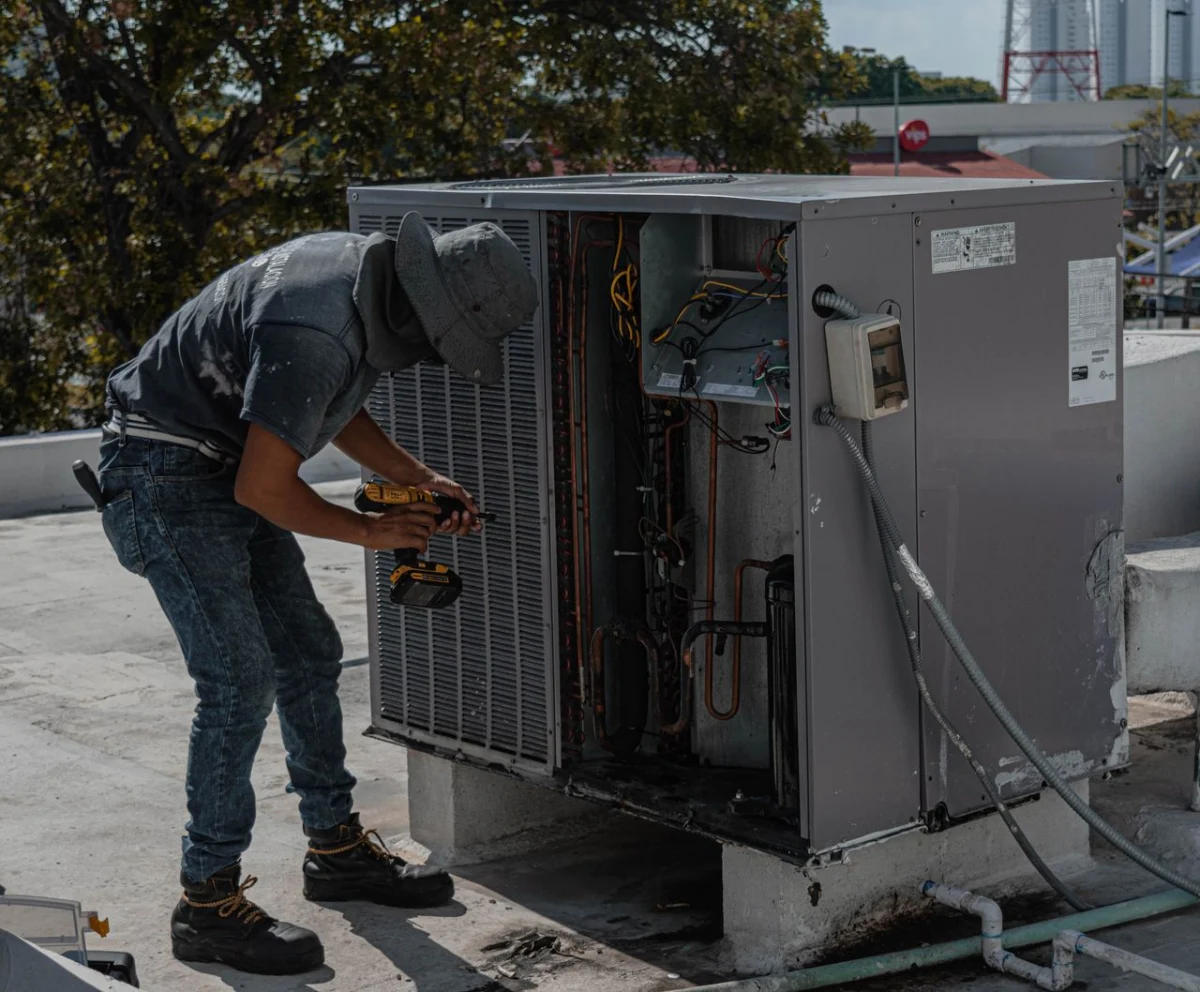
- Installation day (1 day for single zone, 2 days for multi-zone): Indoor unit mounted, line set routed, outdoor unit placed and connected, electrical circuit run, system charged and commissioned
- Post-installation: Permit final inspection scheduled; most Sacramento building departments schedule within 3–5 business days
Total timeline from first call to operating system: typically 2–4 weeks for permitted professional installation.
Line Set Routing in Sacramento Homes
Line set routing (how the refrigerant lines are run from the indoor unit through the building to the outdoor unit) is one of the most visually impactful installation decisions and one where Sacramento's housing stock creates specific challenges:
1950s–1970s Tract Homes (Most Common Sacramento Housing)
Sacramento's vast inventory of post-war ranch homes (slab-on-grade construction, 1,200–2,200 sq ft, 8-foot ceilings) typically route line sets through interior walls down to the crawl space (if any) or through exterior wall penetrations directly to the outdoor unit. For single-zone bedroom or living room installations, exterior wall routing with a line set cover is common and largely inconspicuous. For multi-zone systems, attic routing may be needed to reach multiple rooms.
Two-Story Homes and Additions
Line set routing in two-story Sacramento homes requires careful planning, ideally routing down interior walls to the exterior rather than across exterior surfaces. A skilled contractor will identify chase routes through interior partition walls, closets, and utility spaces that minimize exterior line set visibility.
Exterior Line Set Covers
When exterior line set routing is necessary, line set covers (Rectorseal SlimDuct or equivalent) provide a clean, professional appearance. These are painted to match the home's exterior color and, when properly installed, are nearly invisible from street view. Quality installation means properly secured covers, properly sealed wall penetrations (backer rod and paintable sealant), and covers that follow the wall plane rather than running diagonally.
Electrical Requirements for Sacramento Installations
The electrical portion of a Sacramento mini split installation is frequently the most variable cost component:
- Dedicated 240V circuit: Required for all mini split outdoor units; circuit size depends on system BTU and amperage draw, typically 15A or 20A for single-zone 9,000–18,000 BTU; 25–30A for 24,000–36,000 BTU; 50–60A disconnect for multi-zone systems
- Panel capacity: Many Sacramento homes, particularly those built before 1980, have 100-amp panels with limited spare capacity. Adding mini split circuits may require panel upgrade to 200 amps, adding $1,500–$3,500 to project cost
- Distance from panel to outdoor unit: The electrical cost scales with wire run distance; an outdoor unit on the opposite side of the home from the electrical panel can add $400–$800 in conduit and wire versus a nearby location
Contractor Selection for Sacramento Mini Split Installation
Sacramento has a competitive HVAC contractor market, which means wide quality variation. How to identify a qualified installer:
- CSLB C-20 or C-38 license: California Warm-Air Heating, Ventilating, and Air Conditioning Contractor (C-20) or Refrigeration Contractor (C-38) license required; verify at contractors.cslb.ca.gov
- Factory authorization: Mitsubishi Diamond Elite Dealer, Daikin Comfort Pro, or Fujitsu Elite dealer designation indicates manufacturer training and access to extended warranty programs (some extend to 12 years for registered systems)
- Permit pulling: Ask directly whether the contractor will pull permits. Any contractor refusing is a red flag in Sacramento's enforcement-active building department environment
- 3 written bids: Sacramento HVAC installation prices vary significantly; get at least 3 written proposals for any system above $5,000
Pro tip: SMUD (Sacramento Municipal Utility District) offers rebates for qualifying ENERGY STAR-certified ductless mini split installations. To receive the rebate, the system must be installed by a licensed contractor, permit must be obtained, and the rebate application must be submitted within 90 days of installation. The rebate application requires the permit number, equipment model number, and contractor license number. Save all of these documents from your installation. SMUD's online rebate portal processes most residential applications in 6–10 weeks.
Sacramento Installation Cost Summary (2026)
- Single-zone, 12,000–18,000 BTU, standard installation: $3,200–$5,500 installed with permits
- Single-zone, 24,000 BTU, complex routing or panel upgrade: $5,500–$8,500
- 2-zone system (24,000–36,000 BTU total): $7,000–$12,000 installed
- 3-zone system: $10,000–$16,000 installed
- 4-zone system: $13,000–$21,000 installed
These ranges include equipment, labor, permits, electrical, and line set covers. They do not include panel upgrades (add $1,500–$3,500) or attic insulation improvements (often recommended alongside Sacramento mini split installation to reduce load).
Summary: Plan the Details, Reap the Benefits
Mini split installation in Sacramento rewards homeowners who plan carefully: proper sizing for Sacramento's extreme heat, shaded outdoor unit placement, fully permitted work, and a factory-authorized installer who pulls permits and backs the installation with a manufacturer's extended warranty. The investment pays back through SMUD's favorable TOU rates, available rebates, and the system's ability to maintain comfort through Sacramento's increasingly long and intense summer heat seasons. Done right, a Sacramento mini split installation is one of the highest-return HVAC investments in California.